
Stay with us

RAG vs. File-Based Agents.
The line between File-based agents and RAG isn't black and white. It comes down to query types, corpus size, latency, and the level of control required over the retrieval pipeline.

Instead of a simple 'File-based search vs. RAG' debate, a practical comparison is more useful: what starts faster, what offers better control, and what actually scales. This article summarizes current 2026 data and translates it into a straightforward decision-making framework.
File-based search vs RAG pipeline
Both approaches share the same goal: enabling AI to answer user queries using corporate data sources—such as documentation, internal policies, technical notes, or repositories—by reading relevant files and synthesizing an answer based on their content.
A File-based agent typically uses terminal tools over the filesystem to locate relevant files. It may also use modified file-search systems provided by AI platforms, which are often built upon standard terminal search utilities. In practice, when a user asks, 'What is the process for requesting time off?', the file-search agent generates its own commands to traverse the filesystem—typically using grep, find, or regex filters. It identifies relevant files based on keywords and patterns, then reads them (either entirely or in chunks) to construct a response. This allows for quick results without building a dedicated data layer; the biggest advantage is the rapid start-up time and solid performance on smaller document sets where a full RAG infrastructure isn't yet necessary.
A RAG (Retrieval-Augmented Generation) pipeline functions similarly but utilizes a custom-built retrieval layer. Corporate data is first pre-processed, broken down into smaller segments (chunking), converted into embeddings with associated metadata, and stored in an index. When a user asks a question, the system uses a specific strategy to pull relevant text segments via embedding comparison or reranking before generating the final answer. While the design is more complex than the file-based approach, it offers significantly more control over result relevance, response stability, latency, and costs at scale.
In practice, these approaches are often combined. Modern tools already automate parts of the retrieval layer, making them sufficient for pilots and smaller production scenarios. However, once you need to precisely manage answer quality, performance, and costs, a custom RAG pipeline provides the necessary room to tune relevance, latency, system behavior, compliance rules, and query handling.
- File-based agent: Faster start, minimal setup, less control.
- RAG agent: Higher upfront effort, superior control over quality and scaling.
- Hybrid agent: Routes simple queries through one path and complex ones through the other.
What the benchmarks say: Accuracy vs. Latency vs. Scale
The LlamaIndex benchmark from January 2026 shows no single universal winner. In smaller setups, the filesystem agent demonstrated better correctness and relevance but was slower than a traditional RAG pipeline.
When scaling to a larger volume of documents, RAG began to pull ahead—primarily in latency and partially in correctness—while relevance remained comparable.
The practical takeaway: Small, local datasets are often handled well by a file-based approach, but as data grows, the RAG pipeline's advantages in speed and stability become more pronounced.
A Practical Perspective: Performance and Quality
We are seeing a shift toward simpler retrieval architectures. Modern agents are more capable, better at step-planning, and—thanks to larger context windows—can maintain more relevant context without complex orchestration.
Consequently, some teams find that using fewer tools works better than before: fewer layers mean fewer points of failure and faster iteration. As noted by the Vercel team, this approach proved superior both qualitatively and operationally for their data because the pipeline was cleaner and more stable. In their comparison across representative queries, they reported a measurable shift: the filesystem variant was 3.5x faster, consumed 37% fewer tokens, and increased the success rate from 80% to 100%.
However, it is only fair to separate evidence from opinion. Benchmarks provide a measurable framework, whereas 'just give your agent bash' is an opinionated perspective. For other teams, the results may vary based on data structure, metadata quality, and the specific types of queries users are asking.
When is a File-based agent the right choice?
A file-based agent is ideal for local or well-defined environments, such as searching through a repository, local folders, an internal set of documents, or performing ad-hoc technical analysis.
It works well where deployment speed is critical and queries are predominantly 'lookup' types: finding a specific piece of information, a file, or a configuration snippet.
It is also a powerful choice for internal engineering workflows: configuration audits, incident troubleshooting, or navigating legacy repositories.
- Typical tools: cat, ls, grep, full-text search over files.
- Strength: Natural interaction with specific files and directory structures.
- Risk: Latency and context costs can skyrocket as data volume increases.
When is a RAG pipeline better?
The RAG pipeline shines when the goal is consistent search across a massive corpus, multiple data sources, and precise control over relevance.
The main advantage is the ability to target and tune individual layers: chunking, metadata strategy, hybrid queries, reranking, thresholds, and evaluation metrics.
To fairly compare both approaches, the most practical method is evaluation on the same 'eval set': assessing accuracy, latency, cost per query, and citation quality.
- Typical scenario: Massive corpus and diverse data sources.
- Strength: Granular tuning of relevance, latency, and costs across layers.
- Decision framework: Use the same eval set, same metrics, and same SLAs.
Practical Conclusion
A file-based agent is often a very powerful and practical solution for clearly defined tasks, direct filesystem work, and smaller corpora. It also serves as an excellent rapid PoC to validate a use case's value before investing in a full RAG architecture.
A RAG pipeline isn't automatically the 'better' choice for every scenario, but it provides the most value when you need to manage the quality of the retrieval phase at scale and keep metrics, latency, and costs under tight control.
It's worth watching the current trend: AI agents are evolving rapidly, handling more work autonomously without needing extra infrastructure layers. In practice, a hybrid approach—combining file-based search with a RAG pipeline depending on the query type—often proves most effective. Ultimately, the decision should be driven by measurements on your own data: same query set, same metrics, and same SLA requirements.
"The best results often come not from choosing one over the other, but from a smart combination: file-based for a quick start, RAG for total control."
References
Read next
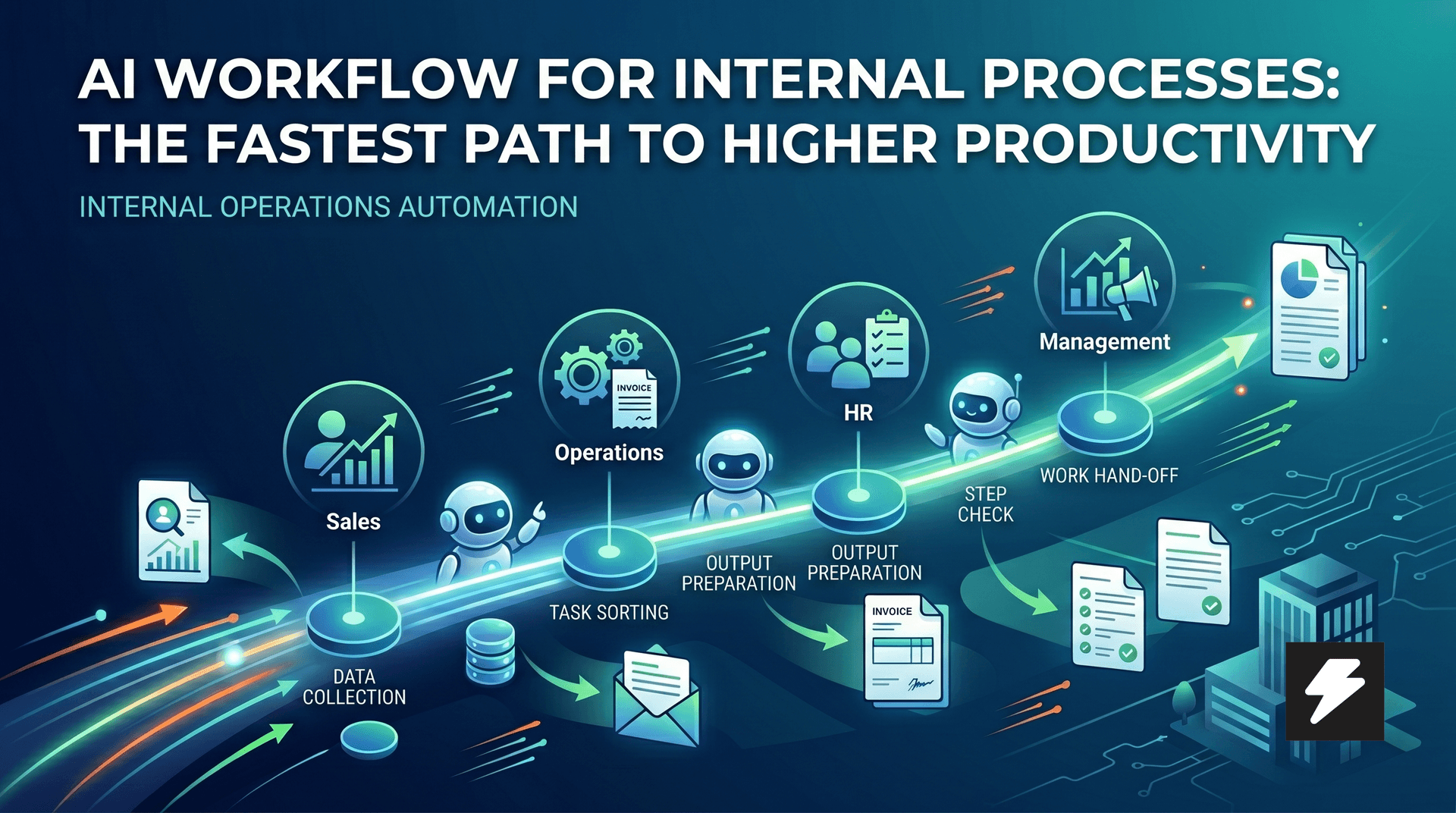
AI Workflows for Internal Processes: The Fastest Path to Higher Productivity
Most companies today approach AI from the visible surface-a chatbot, a copilot in the inbox, or a single smart feature on the website. However, the fastest business impact often lies elsewhere: in internal processes that cost dozens of hours of manual labor every week. This is exactly where it makes sense to build small internal systems and workflows on top of your data. Systems that gather background information, sort requests, prepare outputs, monitor dependencies, and speed up tedious operations. The result isn't just saved time. It's a faster company, cleaner operations, and a team that can focus on more important work.
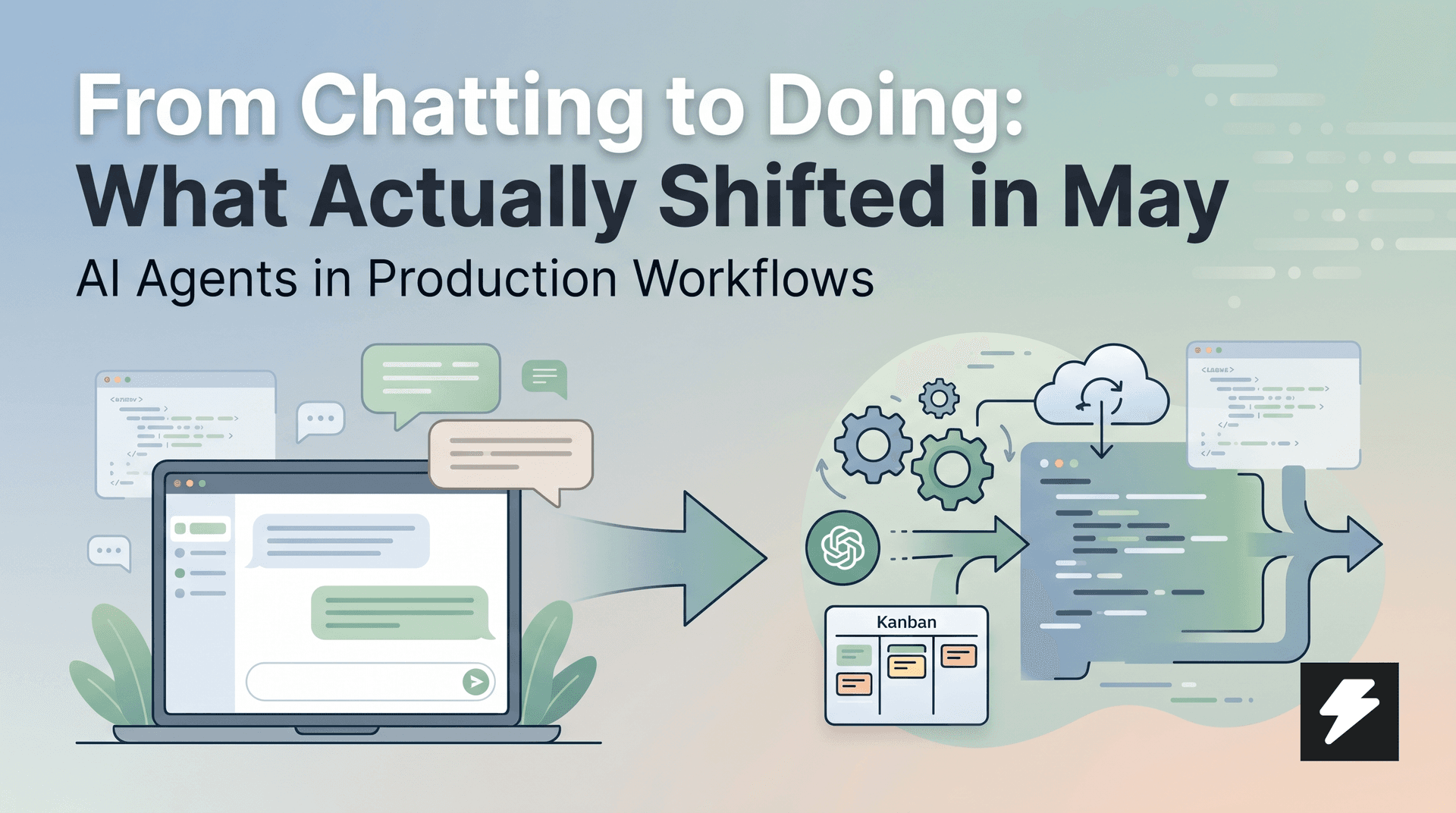
From Chatting to Doing: What Actually Shifted in May
Codex, Claude, Gemini, and Cursor delivered a consistent message in May: agents are moving from chat to production. The focus isn't on a better model, but on environment, governance, and integration with work systems. For companies, this isn't a signal to buy another chat window—it's a signal to rebuild their operating model for AI.
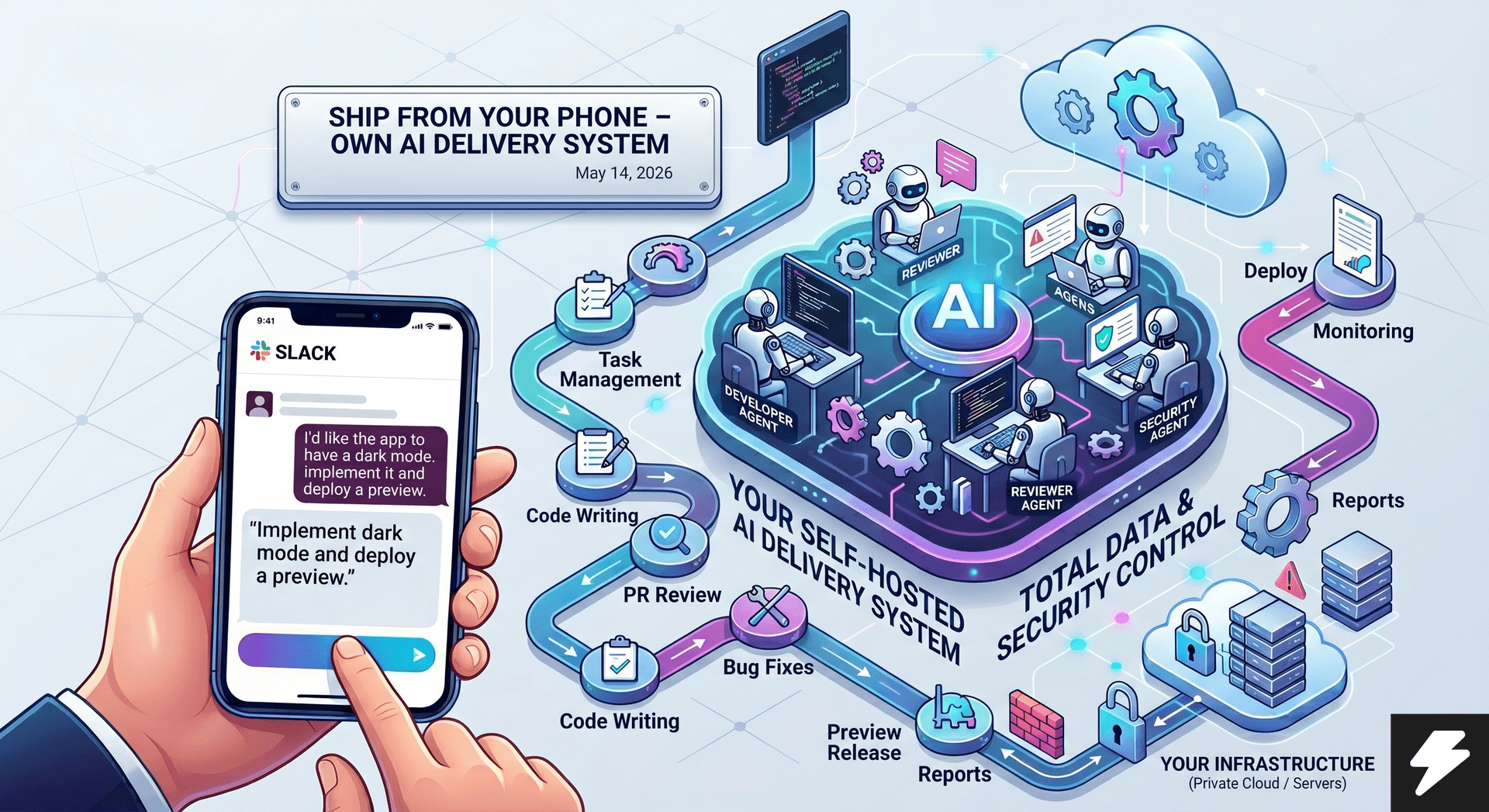
Ship From Your Phone: Your Own AI Delivery System
A single message from your phone triggers the entire delivery engine: PR reviews, incident response, fixes, and preview releases. Within minutes, you get an analysis, a proposed patch, test results, and an audit trail. Everything runs self-hosted, meaning the server, rules, integrations, and data stay fully under your control.