
Stay with us

Meet Marian Krotil
Co-Founder, AI & Software Developer
Marian Krotil is Co-Founder at TameTeq and an AI engineer focused on building intelligent systems that work in real operations. He combines machine learning and software engineering to turn complex ideas into practical products.
Who is Marian?
Marian Krotil is Co-Founder of TameTeq and an AI engineer focused on building intelligent systems that perform reliably in real operations. He has experience in both machine learning and software development, and works across architecture, product design, and hands-on implementation. He enjoys solving complex problems, designing systems from scratch, and moving new technologies from experiment to practical use.
Marian's Superpower: Fearless Problem Solving
Marian's superpower is his ability to take on complex and unfamiliar problems with determination. He believes almost every technical problem has a solution if you choose the right approach, run practical experiments, and keep going until the system is truly understood.
Q&A
Quick Q&A with Marian.
- Q: What differentiates you from typical engineers when solving complex problems? A: I naturally think in systems. I do not focus only on isolated tasks. I look at the full context: how parts communicate, how the system evolves over time, and how to design an architecture that stays simple and maintainable as complexity grows.
- Q: What is a past project or engineering challenge you are genuinely proud of? A: One project I am especially proud of was developing an agentic AI system for the Keboola platform. We designed tools that allowed AI agents to work with the platform and automate complex workflows. That work evolved into Kai, a system Keboola users now use to speed up and simplify their work. The project included AI development, system architecture, product design, user metrics, and evaluation of real usage behavior.
- Q: The AI landscape changes weekly. How do you separate the signal from the noise? A: It is impossible to follow everything, so I focus on high-quality sources: research papers, respected authors, and well-curated newsletters. When something looks promising, I test it in practice. Many things look impressive in demos, but only a small percentage is stable and useful in production systems.
- Q: What does the AI-assisted development paradigm look like in your daily workflow? A: My day often starts with AI agents summarizing project and task status. Routine or administrative work can often be delegated to agents. The biggest part of my work remains architecture design, implementation planning, and system-level thinking. AI significantly speeds up prototyping and coding, but the core discipline stays the same: design the right solution, implement functionality, write tests, and review code to keep systems stable and maintainable.
- Q: Why build under the Tameteq flag? A: Tameteq lets us transfer our AI experience into projects with real impact. I believe modern AI tools can dramatically speed up and simplify software development. At Tameteq, we combine this speed with strong engineering standards and our own ecosystem of AI agents that help us design, build, and maintain complex systems.
Outside Work
Outside development and building projects, which I often enjoy even in my free time, I like to stay active through sports. I play hockey as a hobby and regularly go to the gym or run, which helps me clear my head. I also enjoy traveling with my wife. We both like discovering new cultures, places, and ways of life, and travel often gives me new ideas and fresh perspectives. Time with family is equally important to me and truly irreplaceable.
The Vision
Great systems are not built by accident. They are built where curiosity, discipline, and the willingness to truly understand things come together.
"Great systems are not built by accident. They are built where curiosity, discipline, and the willingness to truly understand things come together."
Read next
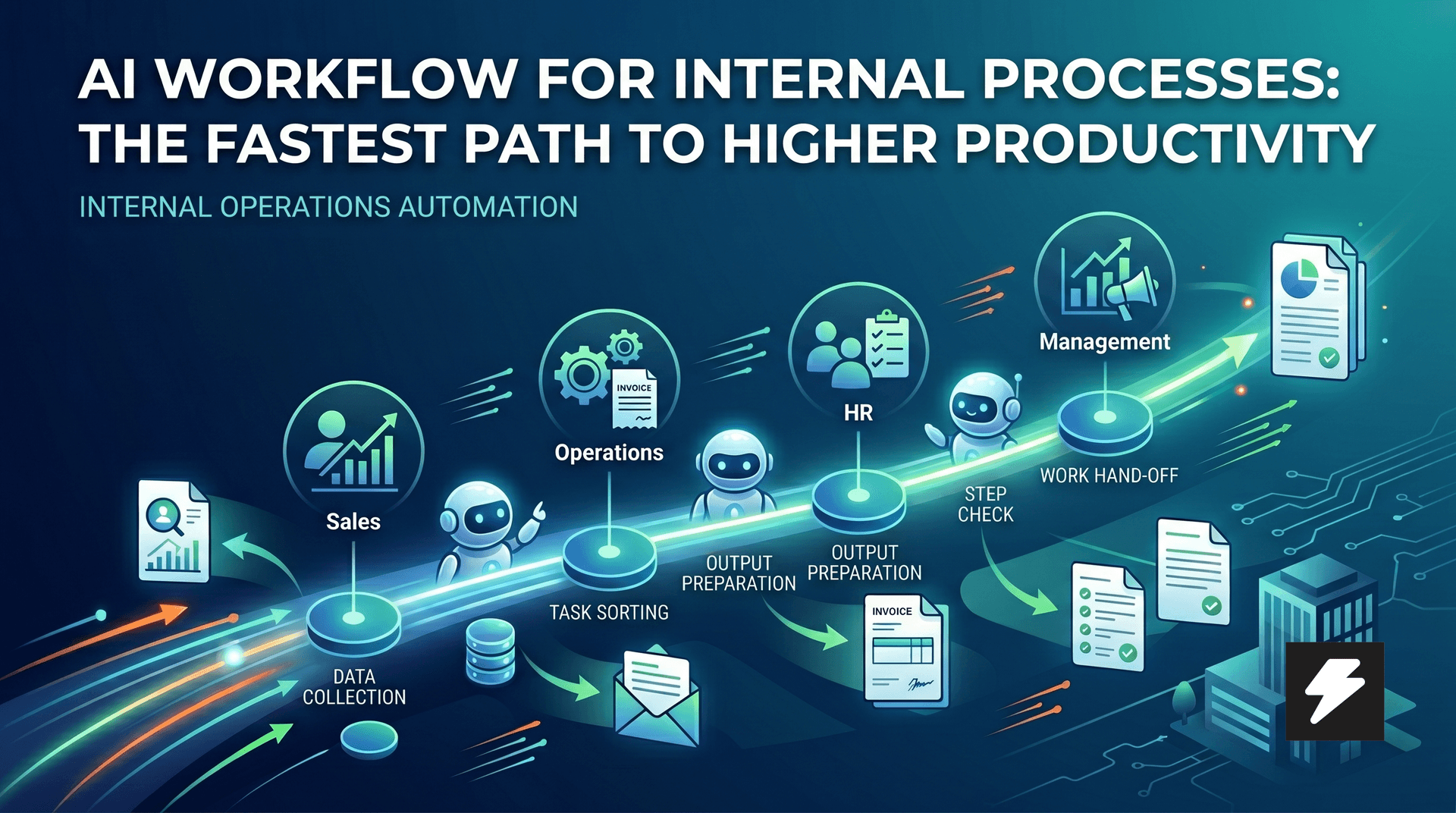
AI Workflows for Internal Processes: The Fastest Path to Higher Productivity
Most companies today approach AI from the visible surface-a chatbot, a copilot in the inbox, or a single smart feature on the website. However, the fastest business impact often lies elsewhere: in internal processes that cost dozens of hours of manual labor every week. This is exactly where it makes sense to build small internal systems and workflows on top of your data. Systems that gather background information, sort requests, prepare outputs, monitor dependencies, and speed up tedious operations. The result isn't just saved time. It's a faster company, cleaner operations, and a team that can focus on more important work.
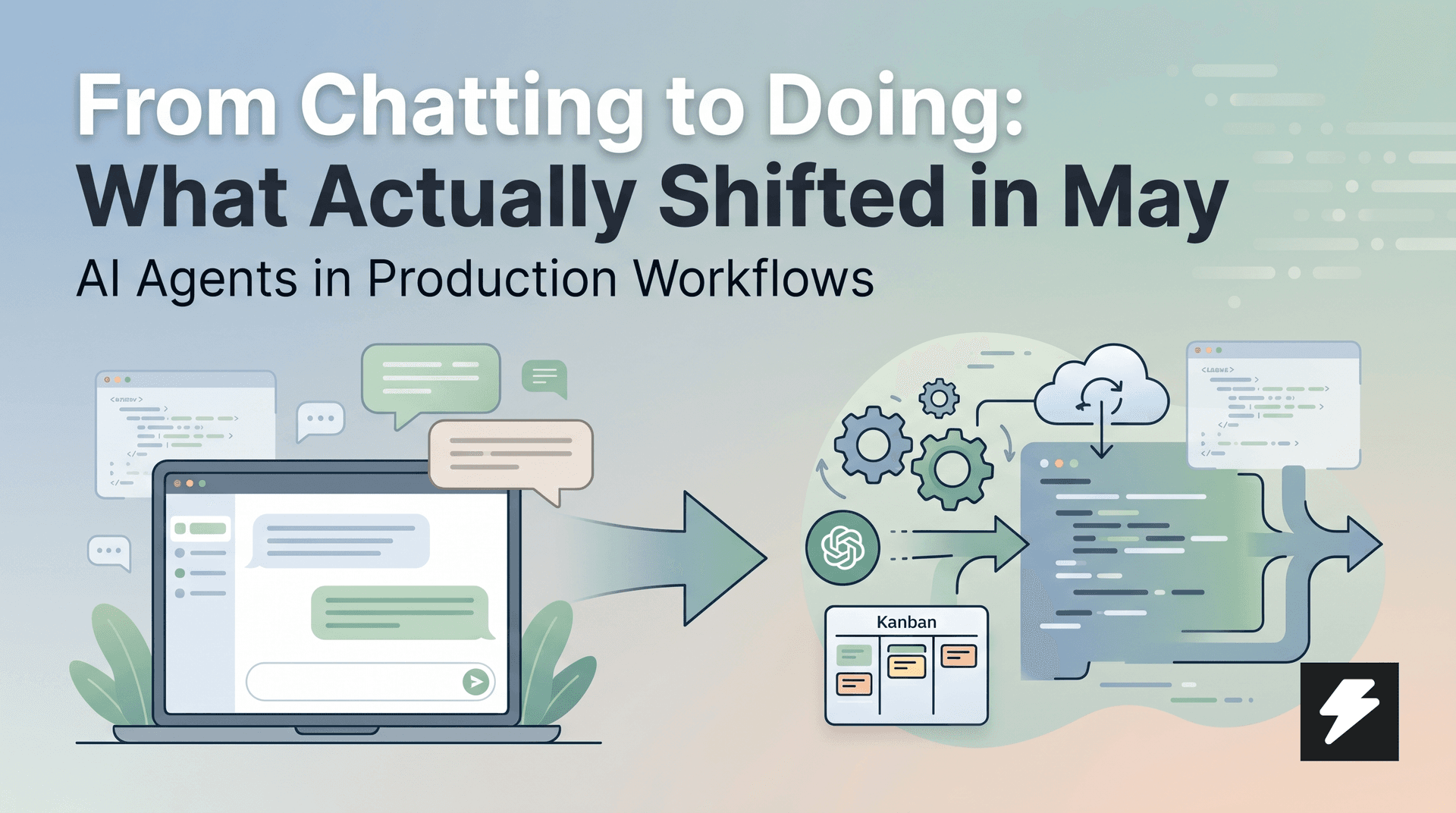
From Chatting to Doing: What Actually Shifted in May
Codex, Claude, Gemini, and Cursor delivered a consistent message in May: agents are moving from chat to production. The focus isn't on a better model, but on environment, governance, and integration with work systems. For companies, this isn't a signal to buy another chat window—it's a signal to rebuild their operating model for AI.
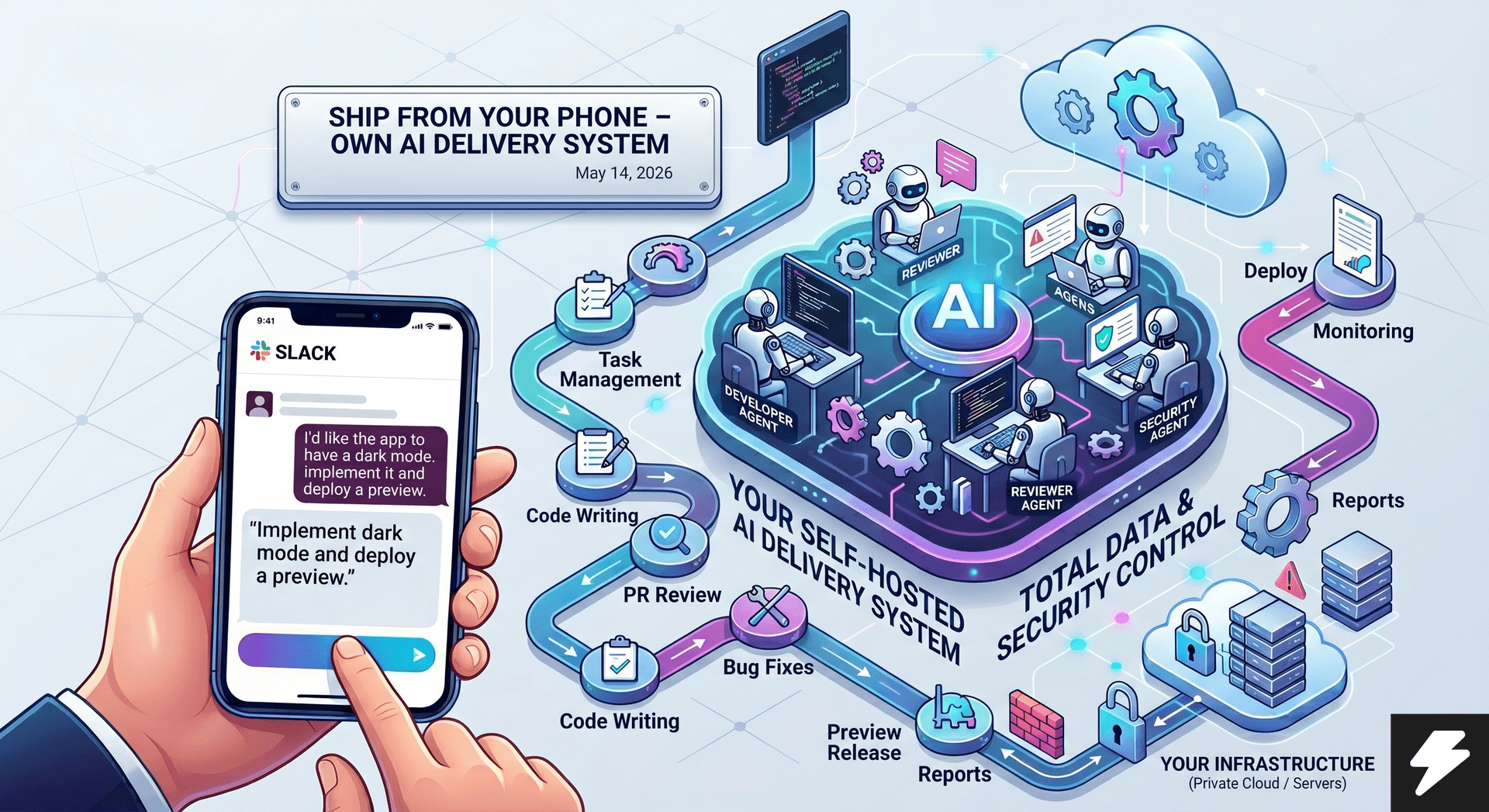
Ship From Your Phone: Your Own AI Delivery System
A single message from your phone triggers the entire delivery engine: PR reviews, incident response, fixes, and preview releases. Within minutes, you get an analysis, a proposed patch, test results, and an audit trail. Everything runs self-hosted, meaning the server, rules, integrations, and data stay fully under your control.